


In May 2025, the battered body of 20‑year‑old Daniel Aritonang was dumped at a dock in Montevideo.
He had spent 18 brutal months aboard the Chinese squid jigger Zhen Fa 7, only to return with two black eyes, bruises along his torso, and rope marks around his neck. His feet and hands were bloated, the size of melons.
Daniel’s fate is chillingly emblematic of Mile 201, the lawless high‑seas expanse just beyond Argentina’s 200‑nautical‑mile exclusive zone (EEZ). Known among local officials as literally one mile beyond their control, Mile 201 is a free‑for‑all squid graveyard: “an area beyond our jurisdiction… distant water fleets operating without any control, targeting migratory species from our EEZ”.
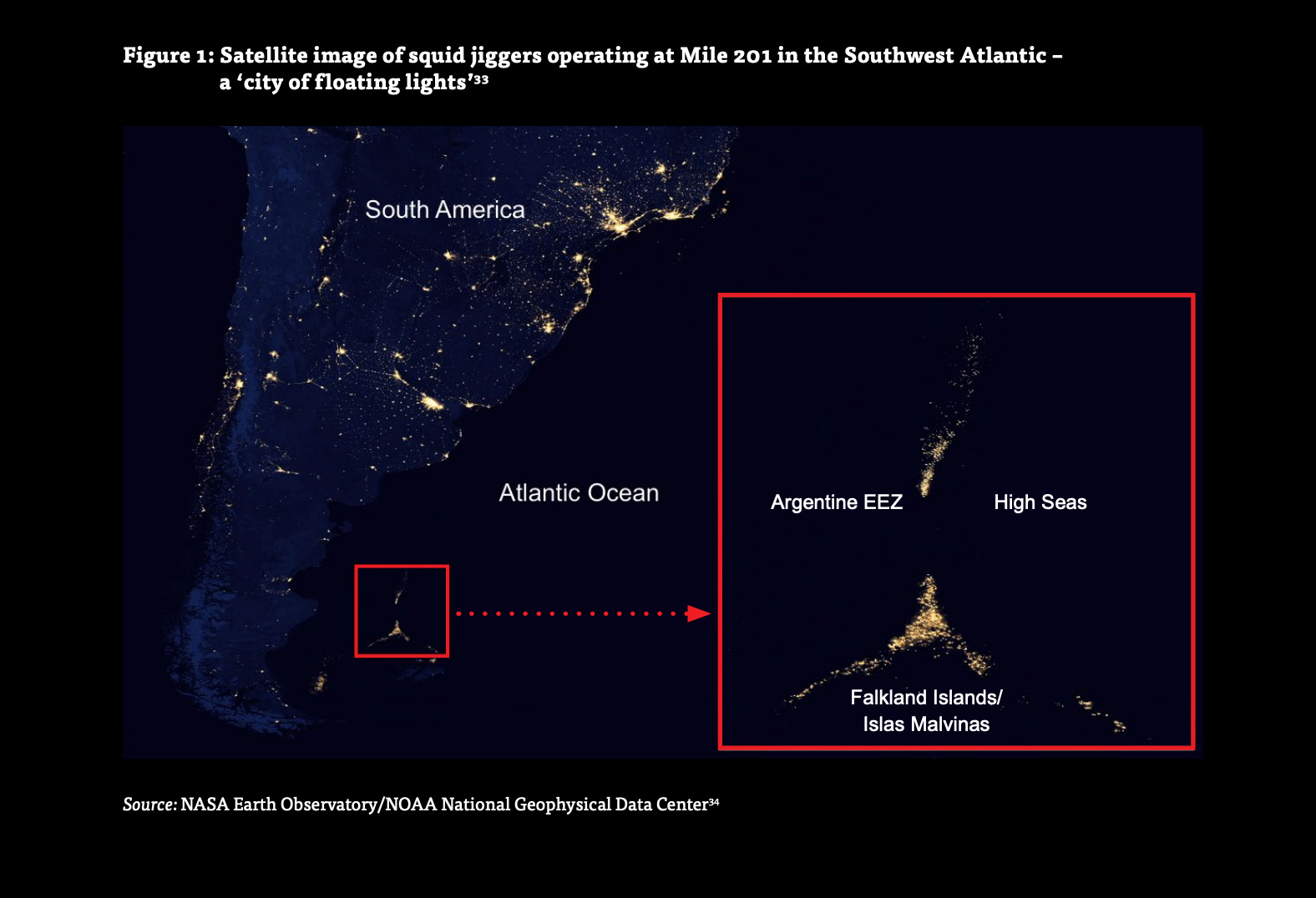
By night, Mile 201 blazes like a floating city of industrial lights. So many, in fact, that satellites can see them from space. You probably remember the video… Now, the war has been exposed.
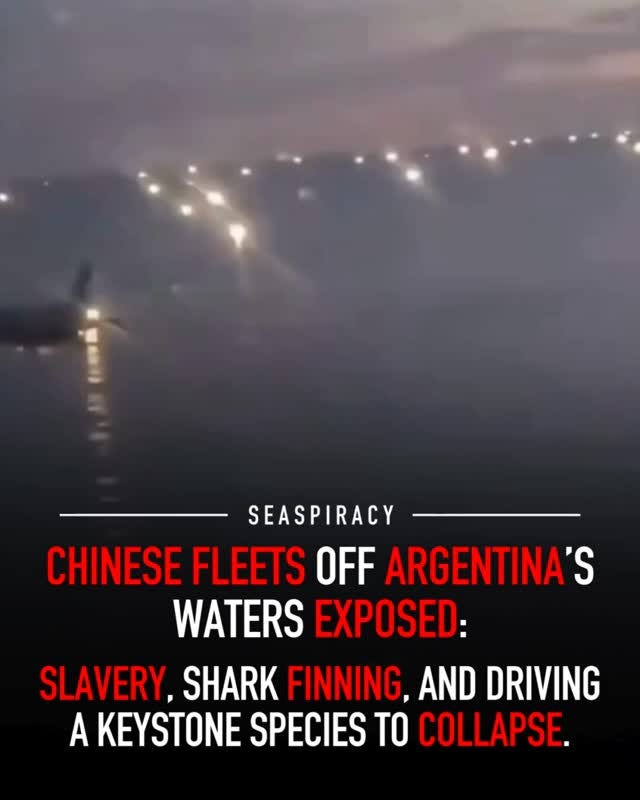
Mile 201: a lawless frontier
Mile 201 is the dark shadow of the Argentine squid fishery.
As each spring, millions of Argentine shortfin squid (Illex argentinus) migrate from national waters into the high seas, massive fleets descend. According to EJF, 343 jigging boats operate there each year (2019–2024).
The vast majority are flagged to East Asian powers: Chinese vessels alone accounted for roughly 74.6% of the fleet observed on AIS. Global Fishing Watch data reveals that between 2019 and 2024 Chinese‐flagged squid boats took 90.9% of all recorded fishing effort in Mile 201.
Chinese fishing hours at Mile 201 soared 85% from 2019 to 2024, even as total squid landings have begun to drop. China dominates Mile 201. 6 of 8 vessels (75%) implicated in onboard deaths were owned by one Chinese conglomerate: Shandong Bodelong Group.
By 2024 this company had flagged almost all its squid jiggers into Argentina’s flag (to access squid quotas), even as crews suffered documented abuse.
Chinese authorities even tried to cap their high‑seas squid fleet at 300 vessels in 2022, but that limit was quietly abandoned. Meanwhile, Argentina’s own EEZ is almost entirely fished by vessels owned by foreign companies: 43 of 80 licensed squid jiggers (54%) were controlled by Chinese firms.
Behind the scenes, fleets are expert at hiding.
At least ten Mile‑201 crews told investigators they were ordered to hide their boat’s identity, painting over names/IMO numbers or even disabling GPS, whenever they fished illegally. One crew member confessed, “we stole specifically in Falkland… Sometimes we would cross the border, and… [by] painting over the serial number and name, we managed to escape.”
These “dark ship” tactics – painting over vessel names, switching off trackers, and sailing under false flags – are supercharged by at-sea refueling and transshipment.
Support ships meet the jiggers offshore to transfer fuel, supplies, and even catch, allowing them to stay at Mile 201 for months or years without ever docking. That means crews can fish without pause, beyond the reach of port inspections or national authorities.
As a result, Mile 201 has become the world’s worst hotspot for AIS blackouts (vessels deliberately disappearing from satellite monitoring). It functions like a pirate port floating in international waters: an unpoliced staging ground where squid are stripped from the sea with impunity, and where captains can change their identity as easily as repainting a hull.
WHO is behind this: Shandong Bodelong Group
Shandong Bodelong Group is a huge Chinese seafood conglomerate heavily engaged in distant-water squid jigging. Its fleet now includes dozens of vessels flagged to Argentina and Ghana (they have gradually flagged its vessels to the Argentine flag to gain access to squid in Argentina’s waters).
Their IUU tactics
The core of Bodelong’s distant-water fleet is its Chinese-flagged squid jiggers, but the company also uses complex flagging and renaming schemes to hide its activities. Many of its boats routinely switch off AIS transponders when slipping into restricted zones, and frequently change names/IDs at sea, a classic IUU tactic.
Flagging-in to Argentina has paid dividends: by 2024–2025 six Bodelong boats implicated in abuse or deaths were listed by Argentine authorities as approved to export squid to the EU and UK.
Supply chain and global markets
Catches from Bodelong’s squid fleet feed a huge international market.
Bodelong controls processing plants that turn Argentine squid into frozen and dried products for export. For example, its plant Rongcheng Guangrun Aquatic Foods packages squid under major seafood brands like Holmesa (a London distributor now owned by Portugal’s Brasmar Group).
Bodelong’s squid has also gone to dozens of buyers in North America, Mexico, Russia and Japan. US import data show multiple shipments of Argentine squid from Rongcheng Guangrun to distributors in the USA and Canada.
Bodelong’s own exports are certified by HACCP and even carry “EU Registration” certificates, a compliance stamp, even though many of those same boats have… dubious legal records.
Labour and human rights abuses
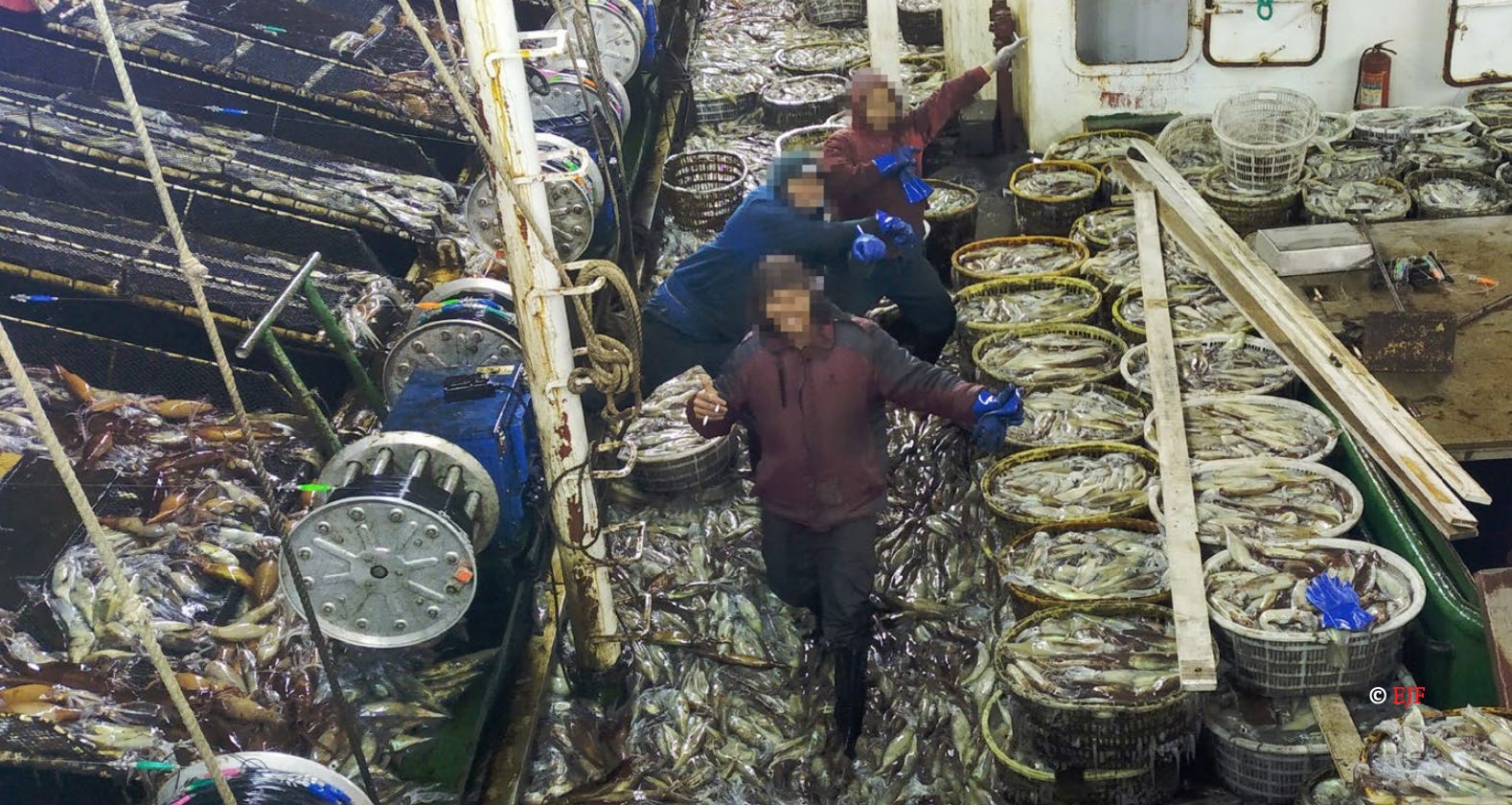
Crew members on Bodelong vessels describe daily violence and terror.
In one account, a deckhand who nodded off after long hours was startled awake by “firecrackers thrown at him” and threatened with repatriation and salary cuts.
Others said that it was “particularly rife” for foremen to tie crew to poles, douse them with hoses, or punch them for minor mistakes.
These aren’t isolated incidents: between 2016 and 2020 at least two crew members died and another fell gravely ill on Bodelong jiggers, then were left in Uruguayan hospitals.
16–20 hour workdays, physical beatings and severe intimidation are normal among that fleet.
China’s squid armada
China isn’t just dominant here, it is the world’s squid leviathan.
In 2023 Chinese vessels took over a third of global squid catch. Just five countries (China, Taiwan, Japan, South Korea, Spain) account for 90% of all high‑seas fishing effort, and China is 60% of that.
By the best estimates, China now fields over 3,000 distant‑water vessels across the globe, subsidized by Beijing’s maritime industrial policy.
Back in Mile 201, the result is a sprawling foreign fleet beyond any control. In 2022 alone, Chinese jiggers spent an estimated 350,528 hours fishing those waters.
Argentine patrols have repeatedly chased or even fired on Chinese boats poaching in the EEZ, but with minimal effect: Chinese skippers often ram or encircle the coastguard cutter to break contact.
Even when Peru tried to enforce its transshipment rules, Chinese, Taiwanese and Korean squiders simply shut off their AIS and stayed at sea twice as long.
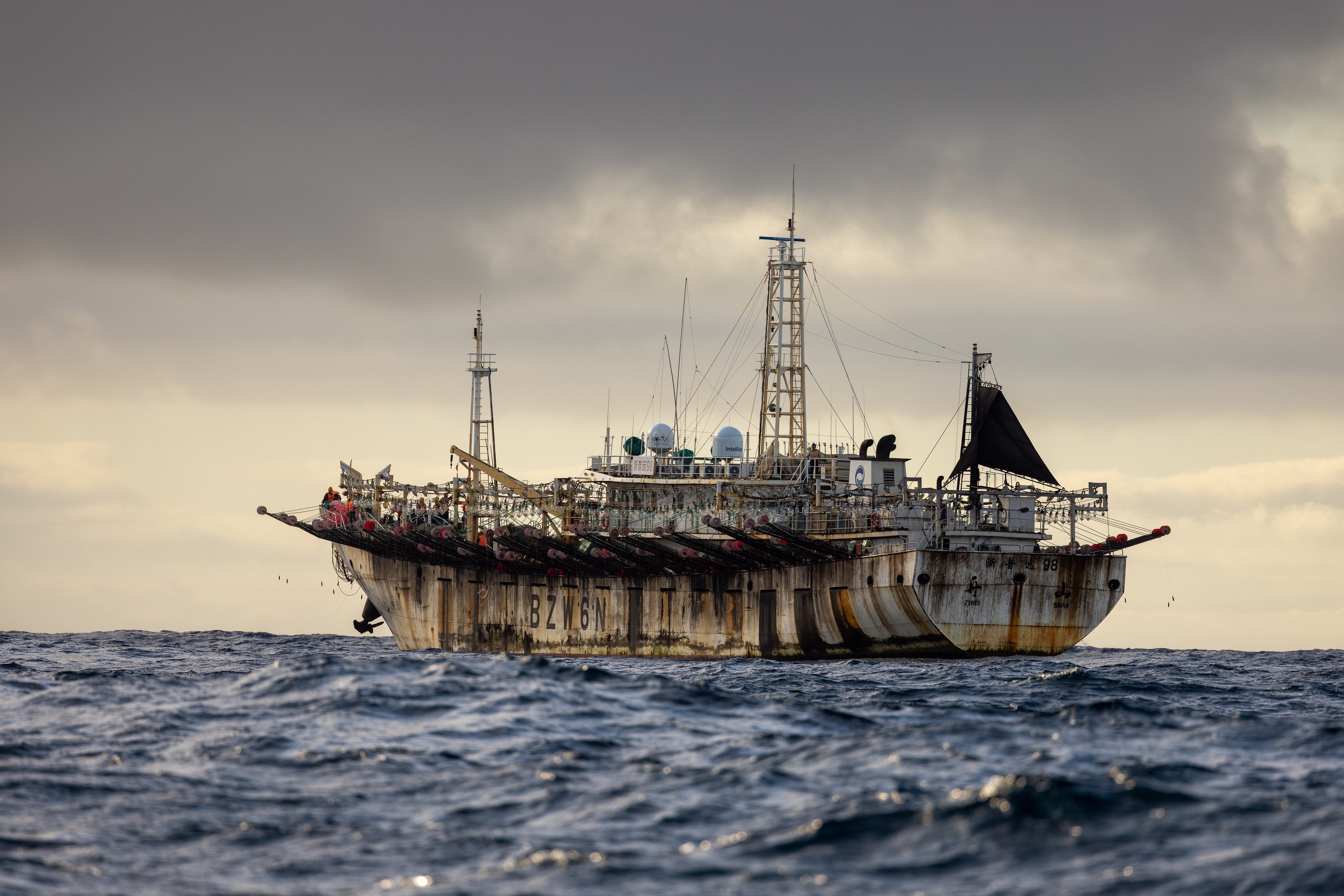
Ghost ships and forced labour
Mile 201 is also a nightmare of human exploitation. Crews endure no Wi‑Fi, no contact with family for years: “I never communicated with my family during the fishing operation. I could communicate when the vessel docked. It took a year for the vessel to dock.”
One fisher described 72‑hour shifts, no sleep until dawn, backs bent under loads of squid... These conditions tick almost all ILO (International Labour Organization) forced‑labour indicators (isolation, deception, debt, violence).
94.6% of Chinese crew had their passports seized, and 94.6% incurred crushing debt bonds to get the job. Over half (57.1%) had their wages withheld to force compliance.
Flags of convenience multiply this opacity: many Mile 201 trawlers fly Panamanian, Belizean or Gambian flags to evade scrutiny. With beneficial ownership buried across nations, identifying the puppet masters behind these ghost fleets is nearly impossible.
In practice, captains who run a murder cruise on the high seas face no accountability.
Squid’s pillar: ecosystem at risk
Squid in the Southwest Atlantic are a keystone of the food web, feeding dolphins, seals, whales, seabirds and fish like tuna and hake. Removing squid by the hundreds of thousands of tons will crash entire ecosystems.
Argentine scientists have long sounded alarms: they impose seasonal closures inside their EEZ because “this population is seriously overexploited”. Outside, however, there is no limit.
Similar squid populations elsewhere, off Japan, Antarctica and New Zealand, have already collapsed under relentless fishing, permanently altering ocean ecology. Without immediate action, Mile 201’s massive unregulated fishery could trigger a chain‑reaction die‑off: fewer squid mean starving swordfish, fewer penguins, an ecosystem unraveling under the pressure of industrial overkill.
Marine mammals: the other victims
The Mile 201 boats have also become oceanic murder machines for marine mammals. Crew interviews document indiscriminate killing of all sorts of wildlife, with many squid jiggers hauling aboard protected sharks and mammals. Over 40% of Chinese boats engaged in the systematic slaying of South American fur seals for their teeth and fur.
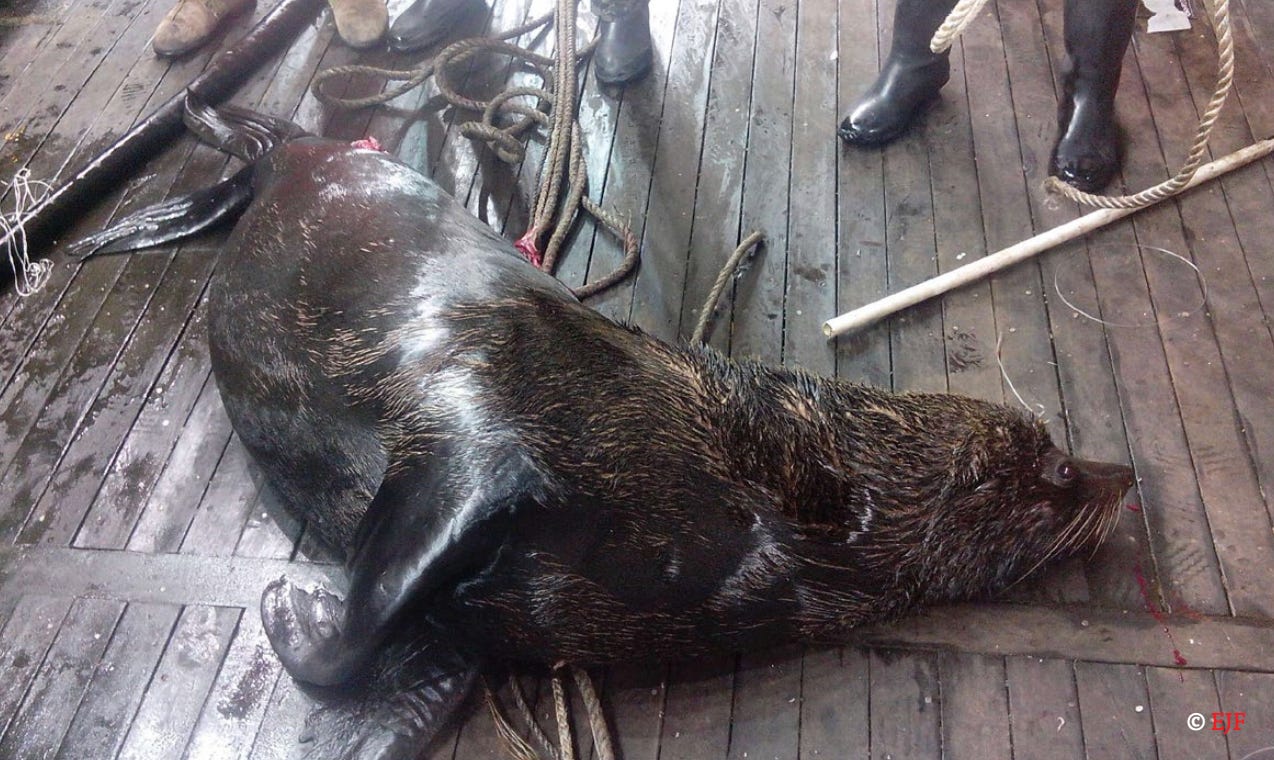
More than a quarter performed shark finning on board. One crew member explained that after bleeding out a hooked seal on deck, “we took off the skin…it had tusks and teeth, and we cut them and kept them.” The carcass is then thrown back in.
Taiwanese fleets did likewise to a lesser extent... Such killings, often by harpoon and brute force, are gruesome and flatly illegal, yet they still happen.
None of this violence has slowed trade. The same vessels butchering animals also supply foreign markets.
Pelagic power: China’s global fishing armada
Mile 201 is a local flashpoint in a global war.
China’s distant‑water fleet is backed by vast subsidies and diplomatic clout. The state deftly uses its embassies and UN votes to shield fleets: Peru, for example, complained that China (with South Korea) pressured it to dilute new at‑sea monitoring rules that would cover squid ships.
The Chinese model is clear: fuel massive distant‑water fleets via public funds, cloak them in corporate secrecy, then muscle aside any rules that might get in the way.
The result is an empire of steel ships circling the globe, from Mile 201 to the Indian Ocean to Africa, each one a potential source of IUU catch and human slavery.
What you can do
The story of Mile 201 is a tragedy born of broken laws and hidden commerce. Yet it also calls for action:
Demand policy change. Press your government and representatives to strengthen fishery governance.
Support enforcement. Advocate international patrols and satellite monitoring in Mile 201. And insist that fishery subsidies be cut off from any company implicated in IUU or slave labor.
Vote with your wallet. As a consumer, contact seafood vendors and brands: ask where their squid comes from, and demand they avoid sources linked to Mile 201. Every label that lacks origin detail is suspect.
Join us in demanding Holmes Seafood be held accountable so this squid doesn’t end up in UK supermarkets.
Spread the word. Raise awareness of Mile 201’s horrors. Share this exposé with friends, on social media, or with environmental groups. The more people know, the harder it will be for industries and governments to ignore this catastrophe.
Mile 201’s era of unregulated plunder must end. Squid are the linchpin of the Southwest Atlantic ocean. If we let foreign fleets fish without limit, we all risk ecological and ethical disaster. By pushing for transparency, enforcement and ethical purchasing, we can help shut down the Mile 201 killing grounds, or at least shine a light into its darkest corners.
Amazing, we continue as humans to kill our home. What will happen to our grandchildren's grandchildren? Overpopulation...